


Folliculitis Explained: Why Your 'Acne' Might Actually Be Ingrowns

📌 Key Takeaways
Those stubborn bumps that won't respond to acne treatments are probably inflamed hair follicles, not clogged pores—and they need a completely different approach.
Check the Timing and Location: Bumps appearing 1–3 days after shaving in areas where you remove hair point to folliculitis or ingrown hairs, not acne.
Stop Scrubbing Harder: Aggressive exfoliation irritates the skin surface without reaching trapped hairs underneath, making inflammation worse instead of better.
Shave Smarter, Not Closer: Using a sharp single-blade razor, shaving with the grain, and replacing blades every 5–7 uses prevents most razor bumps before they start.
Know When to Get Help: Spreading redness, fever, large painful boils, or bumps that keep returning despite changes need professional diagnosis—bacteria and yeast look identical but need opposite treatments.
Different bumps need different fixes—identify the pattern first.
People struggling with recurring bumps in shaved areas will finally understand why standard acne treatments fail, preparing them for the prevention strategies that follow.
~ ~ ~ ~ ~ ~ ~ ~ ~ ~ ~ ~ ~ ~ ~ ~ ~ ~ ~ ~ ~ ~ ~ ~ ~ ~ ~ ~ ~ ~ ~ ~ ~ ~ ~ ~ ~ ~ ~ ~ ~ ~ ~ ~ ~ ~ ~ ~ ~ ~ ~ ~ ~ ~
You've tried the acne washes. The spot treatments. The expensive serums.
The bathroom mirror tells the same story every morning: clusters of small, angry bumps that showed up after shaving, spread after your workout, and refuse to respond to standard pore-clearing spot treatments. They're tender when you touch them. Sometimes itchy. And they keep coming back to the same spots—your jawline, your bikini area, the back of your neck.
Here's what nobody told you: those bumps probably aren't acne at all.
Folliculitis is inflammation or infection of the hair follicle—the tiny pocket in your skin where each hair grows. Unlike acne, which clogs oil glands and pores, folliculitis targets the follicle itself. That's why it often appears after shaving, clusters around visible hairs, and doesn't respond to typical acne treatments. Ingrown hairs (sometimes called razor bumps or pseudofolliculitis barbae) are a related condition where the hair curls back and re-enters the skin. Both look like acne but require completely different approaches.
In the next few minutes, you'll know exactly what you're dealing with and what to do next.
Quick Self-Check: Is It Acne, Folliculitis, or Ingrown Hair?
The fastest way to figure out what's causing your bumps is to look at three things: when they appear, where they show up, and how they feel.
Enhanced Symptom Decoder
Feature | Acne | Folliculitis | Ingrown Hair (Razor Bumps) |
Typical feel | Sore, pressure-like pain | Tender, often itchy or stinging | Tender, may feel a hard bump under skin |
Common locations | Face (cheeks, forehead, chin), chest, upper back | Anywhere with hair—especially shaved areas, thighs, buttocks | Beard area, bikini line, legs, underarms |
Timing | Gradual, often hormonal cycles | 1–3 days after shaving, sweating, or friction | 1–7 days after shaving or waxing |
Appearance | Blackheads, whiteheads, deeper cysts | Small red bumps, often with a visible hair or pus center | Firm bump with visible trapped hair curling beneath skin |
Hair involvement | Not centered on hair follicle | Each bump surrounds a hair follicle | Trapped hair visible at center |
What makes it worse | Hormones, oil, touching face | Shaving, tight clothes, sweat, hot tubs | Close shaving, curly/coarse hair, shaving against the grain |
Your Next-Step Triage
🟢 Green Light (Home Care): Mild bumps, just started, no spreading, no fever. Try the safe home steps below and give it 5–7 days.
🟡 Yellow Light (Adjust + Monitor): Bumps that keep returning, aren't improving after a week, or leave dark marks. Time to evaluate your shaving routine and consider whether you need professional input.
🔴 Red Light (See a Clinician): Spreading redness, fever, severe pain, pus-filled boils, or bumps that keep coming back despite changes. Get evaluated—treatment differs depending on the cause.
The Three Fastest Clues
Timing: Did bumps appear within a few days of shaving or a sweaty workout? That points toward folliculitis or ingrown hairs rather than hormonal acne.
Location: Bumps clustered in shaved areas (jawline, bikini, legs) or where clothing rubs (inner thighs, under sports bras) suggest friction and follicle irritation—not the T-zone pattern typical of acne.
Sensation: Itching is a strong signal. Acne is usually sore but not itchy. Folliculitis often itches, especially as it heals. Ingrown hairs tend to feel like a firm, tender knot with something trapped underneath.
A quick reality check: you can have more than one thing at the same time. Acne can coexist with razor bumps. Folliculitis can ride along with ingrowns after shaving. What you're aiming for is the dominant pattern so you stop throwing the wrong solution at it.
What Is Folliculitis?
Folliculitis simply means your hair follicle is inflamed. Think of each follicle as a tiny sleeve that holds a single hair. When that sleeve gets irritated, infected, or blocked, you get a red bump—often with a visible hair at the center and sometimes a small amount of pus.

Common Types You Might Encounter
Bacterial folliculitis is the most common form. Staphylococcus bacteria (which normally live on skin) enter a damaged follicle—often through a small nick from shaving or friction from tight clothing. You'll see small red or pus-filled bumps that may be tender.
Yeast (Malassezia) folliculitis happens when naturally occurring yeast overgrows in the follicle. It's often triggered by sweating, humidity, or occlusive products that trap moisture against the skin. These bumps are usually itchy and often appear on the upper chest and back. These fungal bumps tend to look nearly identical to one another—uniform and densely clustered. The frustrating part? Antibiotics used for acne actually make this worse, while antifungal treatments make it better.
Irritant folliculitis develops from repeated friction or occlusion without any infection involved. Tight workout clothes, heavy moisturizers, or sitting in sweaty gear can trigger it.
Hot tub folliculitis is caused by bacteria called Pseudomonas aeruginosa that thrive in warm, poorly maintained water. It occurs one to two days after exposure to the water source and generally clears up on its own without treatment in about 7 to 14 days (Centers for Disease Control and Prevention, Healthy Swimming Guidelines).
Myth vs. Reality: Why These Bumps Get Misdiagnosed
If you've been treating "acne" for months without improvement, you're not alone. These conditions get confused constantly—even by people who should know better.
Myth: "If It Has a White Head, It Must Be Acne"
Reality: Both acne and folliculitis can produce pus-filled bumps. The difference is what's underneath. Acne forms when oil and dead skin cells clog a pore. Folliculitis forms when a hair follicle becomes inflamed or infected. Folliculitis lesions tend to be small, uniform, and centered around hair follicles, while acne varies more in size and type (blackheads, whiteheads, deep cysts).
Look closely: if every bump has a tiny hair at its center, you're likely dealing with folliculitis or ingrown hairs—not acne.
Myth: "Scrubbing Harder Will Fix It"
Reality: Aggressive exfoliation often makes things worse. When hair is already trapped beneath the skin or a follicle is inflamed, scrubbing irritates the surface without reaching the actual problem. You end up with raw, red skin and the same bumps underneath.
Gentle exfoliation can help prevent ingrown hairs by keeping the skin surface clear. But once bumps have formed, aggressive scrubbing just adds inflammation on top of inflammation.
Myth: "Shaving Doesn't Matter—Bumps Are Just My Skin Type"
Reality: Shaving technique is one of the biggest factors in folliculitis and ingrown hairs. Pseudofolliculitis barbae occurs when hair grows back into the skin, causing bumps and irritation. Curly or coarse hair is more prone to curling back on itself, but anyone can develop razor bumps with the wrong technique.
Having tightly coiled or curly hair dramatically increases your likelihood of developing razor bumps—clinical estimates show the condition affects up to 80% of individuals of African descent compared to less than 5% of individuals with straight hair profiles (Ogunbiyi, 2019, Clinical, Cosmetic and Investigational Dermatology). But even if your hair is naturally straight, shaving too close, using dull blades, or pulling skin taut can create the conditions for hair to re-enter the skin as it grows.
Common Triggers (Especially After Shaving or Sweating)
Understanding what sets off your bumps is the first step toward preventing them.

Shaving Factors
Dull blades don't cut cleanly—they tug and tear at hair, creating jagged edges more likely to curl back into the skin. A blade that's been used more than 5–7 times is usually past its prime.
Shaving against the grain gives a closer shave but dramatically increases the risk of ingrown hairs. The hair gets cut below the skin's surface and is more likely to grow sideways into the follicle wall.
Dry shaving or insufficient lubrication increases friction and irritation. The blade drags across skin instead of gliding, creating micro-injuries that become entry points for bacteria.
Pulling skin taut while shaving—something many people do instinctively—can cause hair to retract below the skin surface after the razor passes. When it starts growing again, it's already positioned to become ingrown.
Friction and Occlusion
Tight clothing rubs against follicles repeatedly, causing mechanical irritation. Workout leggings, compression shorts, and snug waistbands are common culprits—especially when worn during sweaty activities. Heat, moisture, and friction create an environment your follicles don't love.
Heavy oils and occlusive products can trap sweat and bacteria against the skin. If you're prone to folliculitis on your back or chest, check whether your moisturizer or body oil might be contributing.
Sitting in sweaty clothes after a workout creates the perfect environment for bacterial and yeast overgrowth. That 20-minute drive home in damp gym clothes? Your follicles notice.
Hot Tubs and Pools
Many people get folliculitis from hot tubs. This is so common that there's a condition called "hot tub folliculitis." Warm, agitated water that isn't properly treated allows bacteria to thrive. The rash typically appears on areas covered by your swimsuit within a day or two of exposure.
Shared equipment, towels, and close skin-to-surface contact can also increase skin infection risk. Basics like clean towels and not sharing razors matter.
What to Do First (Safe Home Steps for Mild Cases)
If your bumps are mild—small, not spreading, no fever—you can often manage them at home. The goal is to reduce irritation, keep the area clean, and let your skin heal.
Stop the Trigger for 72 Hours
If shaving caused the problem, give your skin a break. Pseudofolliculitis barbae subsides approximately 4–6 weeks following cessation of the causative hair removal technique, but even a few days of rest can help mild cases calm down significantly.
Reduce friction: switch to looser clothing, skip the tight workout gear for a few days, and avoid anything that rubs the affected area.
Gentle Cleansing
Wash the area with a mild, fragrance-free cleanser. Harsh soaps and scrubs will only add irritation. Pat dry—don't rub.
To clear your skin more quickly and get relief, apply warm compresses to the area. Apply a warm compress at least 3 to 4 times a day and leave the compress on your skin for 15 to 20 minutes each time. This can help soothe inflammation and encourage any trapped hairs to release.
Avoid Picking
This is harder than it sounds, but picking or squeezing bumps almost always makes things worse. You risk pushing bacteria deeper, spreading infection to neighboring follicles, and creating scarring or dark marks that last long after the bump itself heals.
The hardest part is leaving it alone. Also the most effective part.
If you can see a hair loop at the surface, you can try to gently lift it with a sterile needle—but don't dig. If the hair isn't visible, leave it alone.
When OTC Options May Help
For mild bacterial folliculitis, an over-the-counter antibacterial wash containing benzoyl peroxide may help reduce bacterial load. For suspected yeast-related folliculitis (itchy bumps on chest/back that worsen with sweat), using an antidandruff shampoo every day to wash the affected areas of skin is often helpful.
Keep in mind: these are general approaches, not treatments for your specific situation. If bumps are stubborn, recurrent, or very itchy—especially on the chest, back, or shoulders—professional evaluation can help confirm whether you're dealing with bacteria, yeast, or irritation so you don't waste weeks experimenting.
When to See a Clinician or Dermatologist
Some situations call for professional evaluation rather than continued home care.
Red Flags That Need Attention
Spreading redness beyond the original bumps—especially red streaks extending outward—can signal that infection is moving into surrounding tissue.
Fever or feeling unwell alongside skin bumps suggests your body is fighting something more than surface-level irritation.
Severe pain out of proportion to what the bumps look like warrants evaluation. Deep infections (boils or furuncles) can develop when folliculitis goes untreated.
Pus-filled boils that are large, very painful, or don't drain on their own may need medical intervention. Boils occur when the hair follicle becomes deeply infected. The boil is often red, tender and painful and may leave a scar behind. In certain cases, oral medications or procedures are needed to resolve the lesion.
Recurring flare-ups despite improving your routine suggest something else is going on. You might be dealing with a resistant bacterial strain, fungal involvement, or an underlying condition that needs addressing.
Why Professional Diagnosis Matters
Treatment differs: folliculitis may need antibiotics or antifungals; misusing acne products can worsen yeast folliculitis and delay relief.
Bacterial and fungal folliculitis look nearly identical but require opposite treatments. Applying antibacterial products to fungal folliculitis won't help—and vice versa. A dermatologist can often tell the difference through examination, and if needed, a simple culture can identify exactly what's causing your bumps.
While most cases are mild and resolve with basic care, confirming the root cause prevents endless cycles of trial and error. But if yours isn't responding, getting the right diagnosis saves you time, money, and frustration.
Preventing Recurrence: The Hair-Removal Fix
Once your current flare-up calms down, the real goal is keeping it from coming back. If you keep getting "acne" in the same shaved zones, think of it less as a skin problem and more as a hair-and-friction problem. That mental shift changes everything.
Shaving Upgrades
Use a sharp, single-blade razor or an electric clipper with a guard. Multiple-blade razors that cut the hair at skin level or just below the skin's surface should be avoided. That ultra-close shave comes at a cost.
Shave with the grain, not against it. Yes, you'll have slightly more stubble. You'll also have significantly fewer ingrown hairs.
Don't shave the same area twice in one pass. One stroke per section, even if it doesn't feel perfectly smooth.
Hydrate the hair first. Shave after a warm shower when hair is softened, or apply a warm, wet washcloth for a few minutes before starting. Use a lubricating shave cream or gel—not just soap and water.
Replace blades frequently. If you're using a disposable or cartridge razor, swap it out after 5–7 shaves at most.
Quick Reference:
Do | Don't |
Use a sharp blade; replace regularly | Dry shave |
Shave after warm water exposure | Go against the grain |
Use shaving gel/cream with slip | Press hard chasing a closer shave |
Shave with the grain | Shave over already-inflamed bumps |
Limit to one careful pass per area | Share razors (ever) |
Aftercare That Reduces Ingrowns
Rinse with cool water after shaving to help close follicles and reduce irritation.
Skip heavy, occlusive products immediately after shaving. Let your skin breathe before applying thick moisturizers or oils.
Gentle exfoliation between shaves (not during active flare-ups) can help prevent dead skin from trapping hairs. A soft washcloth or mild chemical exfoliant containing glycolic or salicylic acid a few times per week is often enough.
Why "Just Exfoliate" Often Fails
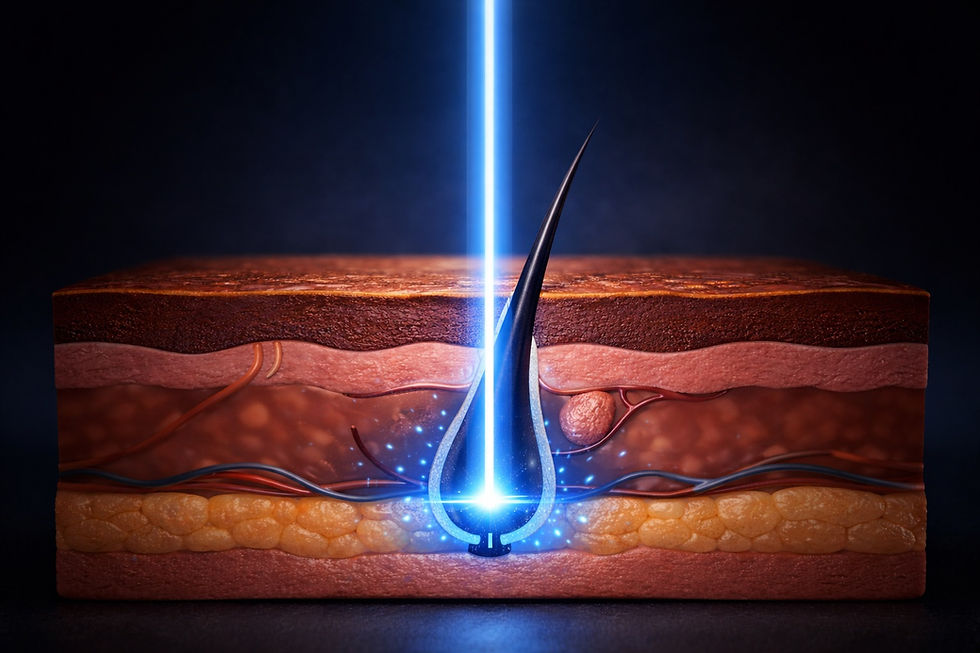
A common myth floats around shaving bumps: exfoliate more and use salicylic acid. But when hair is trapped too deep for topical agents to reach, exfoliation can irritate the surface skin without solving the trapped-hair problem. Laser energy targets the follicle deeper than topical products can reach, addressing the trapped hair at the source.
That doesn't mean you need laser for every bump. It means that if you're stuck in a recurring cycle, a long-term method that reduces hair growth at the follicle can be the lever that finally changes the pattern.
If Razor Bumps Keep Coming Back
Some people do everything right and still struggle with recurring ingrown hairs—especially those with naturally curly or coarse hair. If that's you, it might be worth considering longer-term options.
Electric clippers that leave a bit of stubble (rather than shaving to the skin) can dramatically reduce ingrown hairs while still keeping hair short.
Laser hair removal offers a more permanent approach for those dealing with chronic razor bumps. By targeting the hair follicle itself, laser treatments reduce hair growth over time—which means fewer opportunities for hairs to become ingrown. The most effective treatment for pseudofolliculitis barbae involves destruction of the hair follicle via laser therapy.
If recurring bumps are affecting your confidence or comfort, it's worth having a conversation about your options. You can see our Pittsburgh locations to learn more about what might work for your situation, or book a consultation if you're ready to take the next step.
Related reading:
FAQ
Is folliculitis contagious?
Generally, no. Most folliculitis is caused by bacteria or yeast that already live on your own skin—it's an overgrowth or infection of your own flora, not something you "catch" from someone else. However, you can spread it to other areas of your own body by touching affected areas and then touching unaffected skin. Hot tub folliculitis can be acquired from contaminated water, but you're not contagious to others in normal contact. Don't share razors, use clean towels, and wash hands after touching irritated areas.
How long does folliculitis last?
Mild cases often clear within 1–2 weeks with proper care (stopping the trigger, keeping the area clean, avoiding picking). More stubborn cases may take 3–4 weeks. If you're not seeing improvement after 2 weeks of home care, or if it keeps returning, that's a signal to get professional input.
Can I pop folliculitis bumps?
It's best not to. Squeezing or picking at the bumps can push bacteria deeper into the follicle, spread infection to neighboring areas, and increase your risk of scarring or post-inflammatory dark spots. If a bump comes to a head and drains on its own, keep the area clean. If it doesn't, leave it alone or see a professional if it's bothering you.
What's the difference between folliculitis and razor bumps?
They're related but distinct. Folliculitis is inflammation or infection of the hair follicle from any cause—bacteria, yeast, friction, or irritation. Razor bumps (pseudofolliculitis barbae) specifically refer to ingrown hairs caused by shaving, where the hair curls back and re-enters the skin. Razor bumps can lead to folliculitis if the irritated follicle becomes infected, but not all folliculitis is caused by shaving.
Could it be fungal folliculitis?
Possibly, especially if your bumps are itchy, appear on your upper back or chest, and don't respond to antibacterial treatments. Fungal folliculitis (Pityrosporum) typically appears as tiny, uniform bumps that are extremely itchy. Sweating, humidity, and long-term antibiotic use for acne can all contribute. If you suspect fungal involvement, see a dermatologist—treatment requires antifungal medications rather than antibacterials.
This guide is intended as a comprehensive starting point. For decisions specific to your unique situation, we always recommend consulting a qualified professional. If you want to learn more about the team behind Avere, see About Us.
Disclaimer: This article is for informational purposes only and does not provide medical advice. If you have severe symptoms, spreading redness, fever, or recurrent painful bumps, seek evaluation from a qualified healthcare professional.
Our expert team uses AI tools to help organize and structure our initial drafts. Every piece is then extensively rewritten, fact-checked, and enriched with first-hand insights and experiences by expert humans on our Insights Team to ensure accuracy and clarity.
By: Avere Beauty Insights Team
The Avere Beauty Insights Team creates practical, evidence-aware education to help you understand common skin and hair-removal concerns and decide on next steps with confidence.


Comments